AI Strategist · Founder, Kenzo AI · Philippines & Southeast Asia
AI Strategist for the Philippines.
From experimentation to working capability.
I'm Jay Jaboneta, Founder & AI Strategist of Kenzo AI. I help educators, schools, NGOs, and SMEs move beyond scattered prompting and one-off AI seminars — toward clear priorities, practical workflows, responsible guardrails, and people who can actually use AI well.
AI fluency · organizational adoption · responsible AI · education · SMEs · NGOs
The Role
What does an AI Strategist actually do?
Most organizations don't have an information problem anymore. They already know AI matters. The harder question is what to do next — which use cases deserve attention, which tools fit the work, what risks need governing, and how to help a whole team improve rather than leaving adoption to a few enthusiasts.
That is the role I play. I work between leadership, people, policy, and technology: translating the possibilities of AI into decisions, workflows, training, and systems an organization can actually sustain.
The point is not to make everyone an AI expert. The point is to make the organization AI-fluent enough to make better choices, use the technology responsibly, and keep learning as the tools change.
My AI strategy work now runs through Kenzo AI, where we build practical AI fluency for educators, schools, NGOs, and SMEs across the Philippines and Singapore.
Beyond a one-off training
A workshop can create momentum. Strategy connects that momentum to priorities, policies, workflows, leadership ownership, and follow-through.
Beyond tool selection
The best AI tool is irrelevant if the team does not know when to use it, how to brief it, how to judge the output, or where human responsibility begins.
Beyond technical implementation
Technical systems matter, but organizational adoption is also a people problem: incentives, confidence, habits, governance, and shared standards.
From AI literacy to AI fluency
Literacy is understanding AI. Fluency is being able to decide, describe, discern, and act responsibly with AI in real work.
The Operating Platform · Kenzo AI
Strategy is useful only when people can execute it.
Kenzo AI is where the strategy becomes practice. We combine workshops, fluency frameworks, governance support, role-specific workflows, and structured follow-through so AI adoption does not end when the event does.
The approach is intentionally practical: use the organization's actual work, start with high-value use cases, protect what should stay protected, and build enough internal capability that the team can keep improving without permanent dependence on an outside expert.
Vendor stance is neutral. Whatever is already in your stack stays in your stack. The work is about capability and judgment, not migrating you onto a tool I sell.
Explore Kenzo AI →Four things we build
The strategy becomes tangible across four layers.
Fluency
People know how to delegate, describe, judge, and own work done with AI.
Workflows
AI is connected to real tasks instead of being used as a novelty or side experiment.
Governance
Teams understand privacy, review, accountability, and what should never go into public tools.
Leadership
Owners and internal champions keep adoption moving after the first intervention.
Schools and institutions can formalise this through the Kenzo AI certification ladder — individual credentials that, once enough of a team holds them, unlock institutional certification. See the ladder →
The Approach
How I move an organization from interest to adoption.
The exact engagement changes by organization, but the logic stays consistent: understand the current state, choose the right opportunities, build capability around real work, then create the conditions for that capability to last.
01
Assess
Map current AI use, leadership readiness, team confidence, risk points, and where staff are already experimenting — formally or informally.
02
Prioritize
Identify the highest-value use cases and decide what should remain human-led. Build a short list your team can actually execute.
03
Build
Turn priorities into workshops, workflows, prompts, policies, and role-specific practice using the organization's actual work.
04
Embed
Develop internal champions, review cycles, follow-up clinics, and measures of progress so improvement continues after the intervention.
Ways We Work Together
Start where your organization is.
Some organizations need a shared starting point. Others are ready to redesign workflows, train a cohort, or build an AI adoption system. The format should match the problem.
Keynote
45–60 minutes built for the specific room, not a generic future-of-work audience. Leaders leave with a clearer case, a practical frame, and a concrete next step.
Create shared urgency
Workshop
A half-day or two half-days, hands-on with the team's own real work. Capped so participants build something useful they can keep using after the session.
Build working capability
Programme
Multi-session cohorts with follow-up clinics around day 30 and day 60, so the method is practised, refined, and translated into habits — not merely heard once.
Make the change stick
Advisory
Ongoing counsel on where AI creates value, what needs governing, what to build next, and how leadership should respond as capability compounds.
Scale responsibly
Who This Is For
Organizations ready to move beyond experimentation.
The strongest engagements happen when leadership is willing to treat AI as an organizational capability — not simply a software purchase.
Schools & Educators
Faculty, administrators, curriculum leaders, and school owners building practical AI fluency while protecting academic integrity, privacy, and human judgment.
NGOs & Foundations
Mission-driven teams using AI for communications, program work, reporting, and operations while protecting beneficiary and donor information.
SMEs & Business Teams
Owners and teams looking for high-value applications in customer service, content, operations, research, and decision support without drowning in tools.
Leadership Teams & Associations
Boards, executive teams, professional groups, and networks that need shared language, clear guardrails, and a practical adoption roadmap.
Planning an event rather than an adoption programme? The speaking page covers AI keynotes, conference talks, leadership retreats, and my wider topics.
Explore speaking opportunities →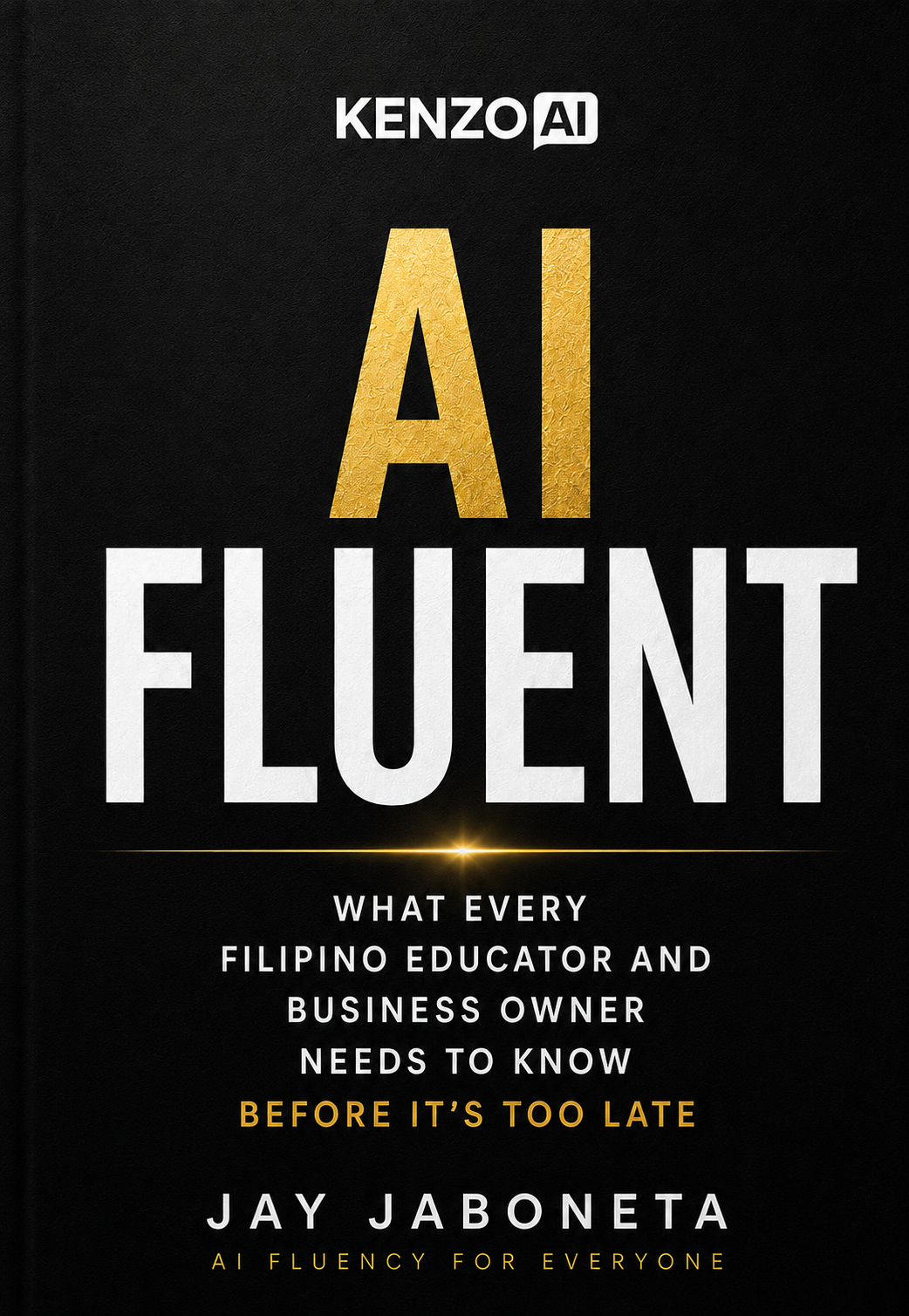
The Book Behind the Practice
AI Fluent
What Every Filipino Educator and Business Owner Needs to Know Before It's Too Late is the plain-language book behind much of this work — written for Filipino classrooms and businesses rather than a Silicon Valley abstraction.
The same principle runs through the book and Kenzo AI: AI becomes valuable when people can use it with judgment, context, and responsibility in the work that actually matters.
Read more about AI Fluent →Common Questions
Frequently asked questions.
What does an AI Strategist do?
An AI Strategist helps an organization decide where AI can create value, what should remain human-led, what guardrails are needed, and how people build the capability to use AI well. The work connects leadership decisions, workflows, training, governance, and adoption rather than focusing on a single tool.
How is an AI Strategist different from an AI trainer or technical AI consultant?
Training is one part of AI adoption, and technical consulting can be another. My AI strategist work sits across the whole adoption problem: choosing priorities, building fluency, designing practical workflows, creating responsible-use guardrails, and helping the organization sustain the change after the first workshop.
What is AI fluency?
AI fluency is the ability to decide when to use AI, describe work clearly to an AI system, judge the output critically, and take responsibility for how that output is used. The goal is practical capability in real work, not simply familiarity with AI terminology.
Who do you work with through Kenzo AI?
I work with educators, schools, NGOs, SMEs, leadership teams, and associations across the Philippines and Singapore that want a practical path from AI experimentation to organization-wide capability.
Can you start with a keynote and then work with the organization more deeply?
Yes. A keynote can create shared language and urgency, followed by a workshop, multi-session programme, or advisory engagement through Kenzo AI. The engagement can be designed as a single event or as the first step in a broader adoption journey.
Work With Jay · Kenzo AI
Ready to turn AI interest into capability?
Tell me what your organization is trying to accomplish, who needs to be involved, and where you are today. We can determine whether the right next step is a keynote, workshop, programme, or advisory engagement.